

Netherlands Centre for Coastal Research
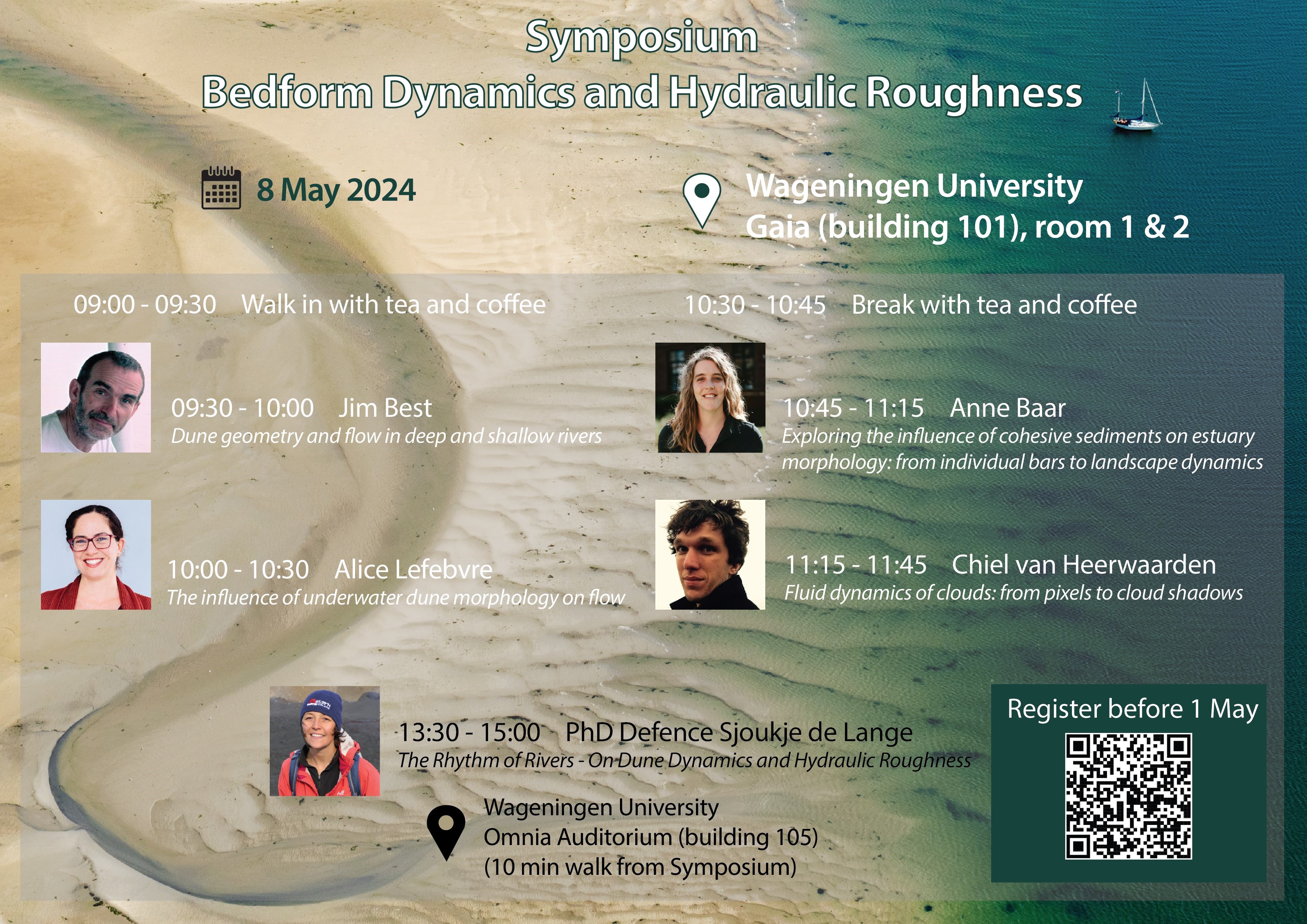
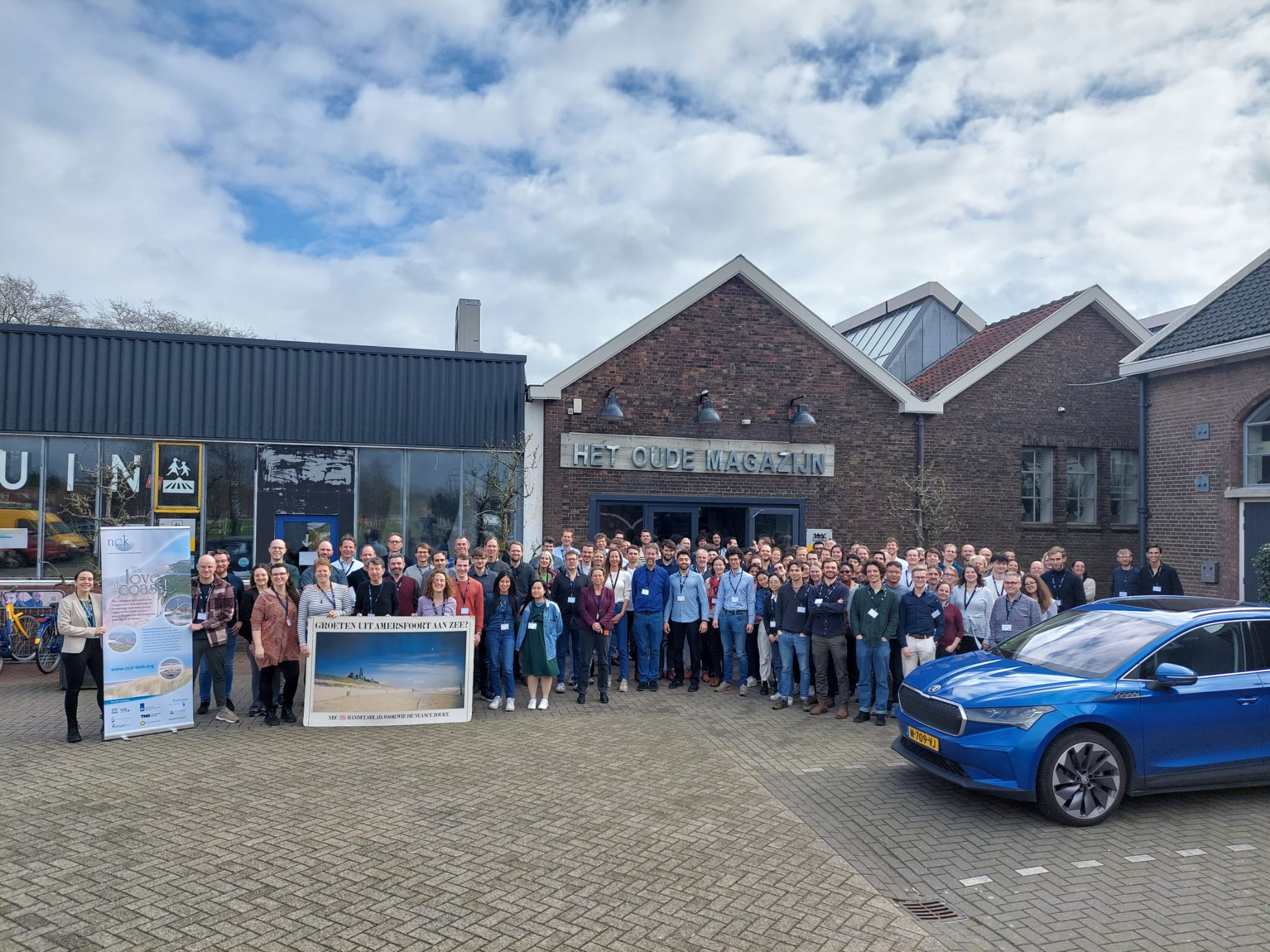 It’s a wrap! After 3 wonderful days, the NCK Days 2024 have concluded successfully. 158 coastal enthusiasts from across different organisations, with diverse backgrounds and years of experience gathered in Amersfoort for the annual NCK Days. This year’s theme was ‘Innovative science for a resilient coast’.
The event started on Wednesday with a full-day fieldtrip to the Marker Wadden. In the evening there was an icebreaker at the city brewery de Drie Ringen so that all participants could get to know each other.
For the following two days a very nice program was put together: 35 speakers gave presentations about sand waves, coasts, estuarine hydrodynamics and morphodynamics, dunes, coastal ecology, and nature-based solutions. All presentations were very interesting, and speakers varied from old hands to very young master students. Sem Geerts & Bart van Westen took home the award for the Best Presentation. Moreover, there were 37 posters to behold, accompanied by a short pitch. Congratulations to Wout Ploeg & Floris van Rees for winning the Best Poster award!
Traditionally, the conference dinner took place on Thursday evening. The recently founded Young-NCK tested our (non-)coastal related knowledge by hosting a pub quiz. The table of O-NCK walked away with the prize (and the O doesn't stand for Young...).
The NCK Days were a big success! Thank you to this year’s organisers from IHE Delft: Khin Nawarat, Natascia Pannozzo (TU Delft), Trang Duong, Johan Reyns, Mick van der Wegen, Dano Roelvink, and Niamh McKenna.
Mark your calendars for 19, 20, and 21 March 2025 for next year’s #NCKdays!
 DR. H.M. SCHUTTELAARS
bij besluit van het College van Bestuur van 19 januari 2021 benoemd tot hoogleraar in de Faculteit Elektrotechniek, Wiskunde en Informatica aan de Technische Universiteit Delft, om werkzaam te zijn op het vakgebied Mathematical Physics is ter gelegenheid van zijn ambtsaanvaarding voornemens een oratie te houden, met als titel:
’Mathematics and the Art of Marine Modelling’
Datum: vrijdag 22 maart 2024
Aanvang: 15.00 uur
Locatie: Aula (Auditorium/3e etage) Mekelweg 5 te Delft
De Rector Magnificus van de Technische Universiteit Delft, prof. dr. ir. T.H.J.J. van der Hagen, nodigt u hierbij uit tot het bijwonen van deze academische plechtigheid. Na het uitspreken van de rede is er gelegenheid tot het aanbieden van gelukwensen.
TU Delft / Communicatie telefoon (015) 278 64 95
Mw. M.A. Schrijvershof-Vink
Protocol & Events Manager
E-mail: This email address is being protected from spambots. You need JavaScript enabled to view it.
Routebeschrijving Aula: www.tudelft.nl
Hoogleraren van andere universiteiten zijn tevens welkom om deel uit te maken van het cortège. Zij dienen daartoe uiterlijk om 14.30 uur in de Senaatszaal (Aula/2e etage) aanwezig te zijn. Het wordt op prijs gesteld dat de hoogleraren de toga/baret van hun universiteit dragen.
DR. H.M. SCHUTTELAARS
appointed professor in the Faculty of Electrical Engineering, Mathematics and Computer Science at Delft University of Technology by decision of the Executive Board of January 19, 2021, to work in the field of Mathematical Physics, intends to give an inaugural lecture on the occasion of his assumption of office, with as title:
'Mathematics and the Art of Marine Modeling'
Date: Friday March 22, 2024
Start: 3:00 PM
Location: Aula (Auditorium/3rd floor) Mekelweg 5 in Delft
The Rector Magnificus of Delft University of Technology, Prof. Dr. Ir. T.H.J.J. van der Hagen, hereby invites you to attend this academic ceremony. After delivering the speech, there is an opportunity to offer congratulations.
TU Delft / Communications telephone (015) 278 64 95
Mrs. M.A. Schrijvershof-Vink
Protocol & Events Manager
E-mail: This email address is being protected from spambots. You need JavaScript enabled to view it.
Directions to the Aula: www.tudelft.nl
Professors from other universities are also welcome to be part of the cortège. They must be present in the Senate Hall (Aula/2nd floor) no later than 2:30 PM. It is appreciated that professors wear the gown/cap of their university.